
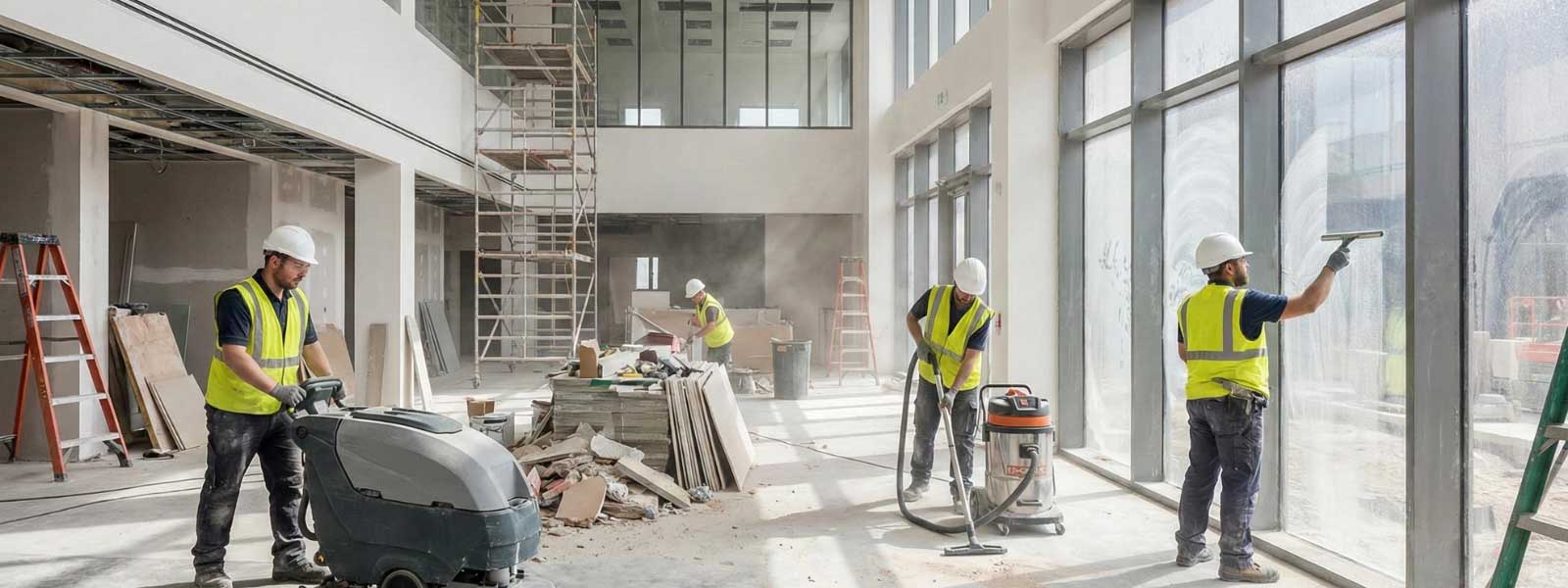
| Quick Answer: Post construction cleaning services should be booked after the last major trade finishes but before move-in, and a proper job covers more than a quick wipe-down. Expect drywall dust and film removed from window glass and frames, gutters cleared of shingle grit and debris, and exterior surfaces pressure washed to remove overspray and residue. Skipping any one of these leaves a home that looks finished from the street but still carries the marks of the build. |
Finishing a build or a major renovation feels like the hard part is over. It isn’t quite. Construction leaves behind a specific kind of mess that regular house cleaning wasn’t built to handle. Fine dust clings to glass. Paint lands where it shouldn’t. Debris settles into gutters long before anyone notices. That’s the gap post construction cleaning services are meant to close. It’s easy to underestimate how much of it hides in plain sight. Sometimes the sun hits a window the wrong way. Sometimes the first real rainstorm shows exactly where the gutters stopped working.
Most homeowners only realize the scale of it once they’ve moved back in. A window that looked fine during the final walkthrough shows a faint haze once the afternoon light comes through it. A gutter that seemed to be draining fine backs up the first time it rains hard. None of this means the construction crew did a bad job. Construction and cleaning are simply two different trades with two different jobs. The second one doesn’t always get the attention it needs before people move on with their lives.
Why Post-Construction Cleaning Is Different From Regular Cleaning
A standard cleaning routine assumes dirt that wipes off with soap and a cloth. Construction residue doesn’t behave that way. Drywall dust is fine enough to work itself into window tracks and screen mesh. It sits there until something disturbs it, then streaks the glass on the next rainy day. Paint overspray bonds to surfaces in a way that a damp rag simply pushes around instead of lifting. Gutters catch shingle grit, sawdust, and packaging debris. A homeowner rarely checks for any of it until water starts spilling over the edge. Groups like the International Window Cleaning Association exist specifically because glass and exterior surfaces need different equipment, training, and technique than general household cleaning. That’s exactly the gap post-construction residue exposes.
This is why post construction cleaning services exist as their own category, separate from a routine house cleaning or a seasonal touch-up. The tools, the technique, and the sequence all differ. A general cleaner might do a fine job on countertops and floors. They won’t necessarily have the equipment or experience to know a gutter needs flushing, not just clearing of what’s visible from a ladder.
Why Timing Matters More With Construction Residue
There’s also a timing element that regular cleaning doesn’t have to think about. A house people have lived in for years accumulates dirt gradually, so a missed spot this week gets caught next week. Construction residue behaves differently. The longer it sits, the more it bonds to the surface underneath. That’s part of why post construction cleaning tends to be a one-time, thorough job rather than something folded into an ongoing cleaning schedule.
New Build vs. Renovation: Does the Cleaning Differ?
A brand-new home and a mid-renovation home don’t leave behind identical messes, even though both fall under the same post construction cleaning services umbrella. A full new build usually means fresh drywall dust and caulking haze on every window. Shingle grit shows up in every gutter from a brand-new roof. A layer of construction dust covers every exterior surface. Nothing has been cleaned yet, so the job covers the entire property from top to bottom.
A renovation is usually more contained. If the work was limited to a kitchen or an addition, the mess tends to concentrate near that area: the windows closest to the work zone, the gutter section under the new roofline, the patch of siding nearest the scaffolding. A good cleaning company scopes the visit to match, rather than charging a full-property rate for a partial job. It’s worth asking about this directly, since some companies default to a flat whole-house price regardless of how much of the property was actually affected.
Construction residue that’s left alone doesn’t stay the same over time either. Film on glass hardens further with sun exposure. Debris packed into a gutter through even one freeze-thaw cycle compacts into something closer to cement than leaves. What would have been a straightforward first cleaning turns into a harder, more expensive second visit, simply because nobody got to it in time.
What Post Construction Cleaning Services Actually Cover
Not every company offering “post construction cleaning” covers the same ground. Some focus purely on interior debris and trash removal. A more complete exterior-focused service scopes the job around three areas: glass, gutters, and exterior surfaces. Knowing what falls into each category makes it easier to spot a company that’s actually equipped for the job.
Windows and Glass
New construction and renovation both leave a film on window glass, a mix of drywall dust, caulking haze, and sometimes light paint overspray. A squeegee and standard glass cleaner won’t lift this kind of grime easily. It usually needs a dedicated pass with the right solution, along with attention to frames, tracks, and screens where dust settles and stays.
Gutters
Roofing work in particular leaves shingle grit, nail fragments, and packaging scraps sitting in the gutter system. Left alone, this settles at the bottom of the channel and blocks the downspout well before anyone can see it from the ground. A proper post-construction gutter clear involves manually removing this debris, then flushing the downspouts to confirm water is actually draining. A gutter can look empty from a ladder and still be blocked lower down, which is why the flush step matters as much as the visible clearing.
Exterior Surfaces
Siding, brick, concrete, and walkways all take on dust and residue during a build. Pressure washing at the right setting removes this without damaging the surface underneath. This matters more on softer materials like vinyl siding or stucco than it does on concrete. The wrong pressure setting on the wrong material can strip paint, crack caulking, or force water behind siding panels, which is its own kind of expensive mistake.
| Area | What Builds Up | What the Cleaning Involves |
| Windows & glass | Drywall dust, caulking haze, light overspray | Dedicated glass cleaning, frame and track detailing |
| Gutters | Shingle grit, sawdust, packaging debris | Manual clearing plus a downspout flush |
| Exterior surfaces | Dust film, residue, footprints, minor overspray | Pressure washing set to the surface material |
The Three-Stage Approach to Exterior Post-Construction Cleanup
A rushed, one-pass cleaning rarely holds up once the dust settles again. A more reliable post construction cleaning service moves through the exterior in stages rather than trying to finish everything in one sweep.
Stage One: Clearing the Bulk
Large debris comes off first: leftover packaging near the gutters, loose dust on window sills, obvious residue on siding. This makes surfaces safe to work on closely without spreading fine particles further. Skipping this step and going straight to detailed cleaning usually just moves dust around instead of removing it.
Stage Two: The Detailed Pass
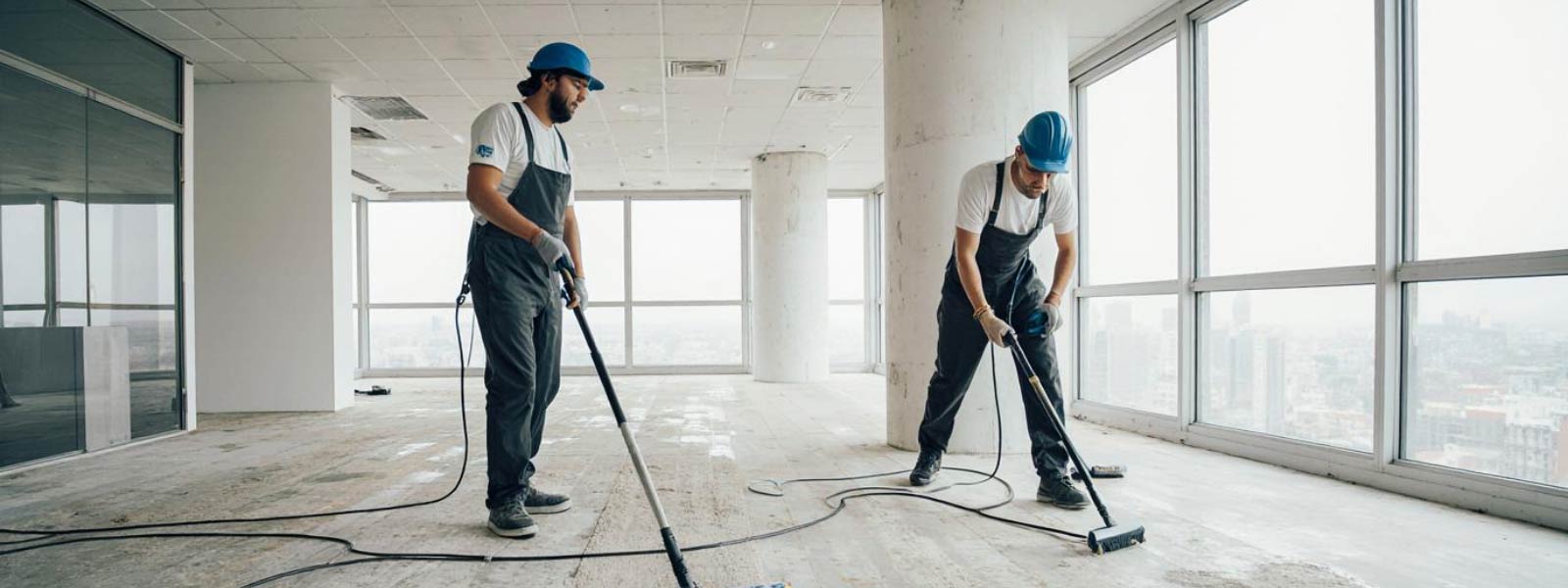
This is where the real work happens. Glass gets its dedicated cleaning solution. Gutters get manually cleared and flushed. Exterior surfaces get pressure washed at the right setting for the material underneath. This stage takes the longest, and it’s where the difference between a rushed job and a thorough one becomes obvious.
Stage Three: The Follow-Up Check
Fine dust has a way of resettling a day or two after the first pass, especially on glass. A short follow-up visit catches what wasn’t visible right after the main cleaning and confirms gutters are still draining properly. Not every company includes this step, and it’s one of the easier things to ask about before booking.
How Soon After Construction Should You Book Cleaning
Timing matters more than most homeowners expect. Booking too early, while trades are still finishing interior work, often means paying for a cleaning that gets undone within days. Dust from final touch-ups, trim work, or last-minute painting settles right back onto surfaces that were just cleaned. The better window is after the last major trade wraps up, flooring, painting, and any exterior work, but before move-in day or a final walkthrough with a buyer.
In colder climates, this timing matters even more. Gutters filled with shingle grit and sawdust heading into fall don’t just sit there quietly over winter. That debris holds moisture. Moisture that freezes and thaws repeatedly puts pressure on the seams and brackets holding a gutter system together. A cleaning booked before the first hard freeze avoids a problem that would otherwise show up as a sagging section come spring, usually right around the time the snow melts.
DIY vs Professional Post Construction Clean Up Services
Some parts of post-construction cleanup are reasonable to handle without help. Others aren’t, mostly because of the equipment and access involved rather than the skill required.
| Task | Reasonable to DIY | Better Left to a Professional |
| Wiping interior sills and frames | Yes | |
| Removing dried drywall film from glass | Sometimes, with the right solution | Yes, for large window counts or upper floors |
| Clearing visible gutter debris | Single-story, easy access only | Yes, for anything above one story or heavy debris |
| Pressure washing siding or brick | Not recommended without training | Yes, wrong pressure or angle can damage siding |
The pattern that shows up most often looks something like this. A homeowner clears the glass and gutters themselves, gets through the visible layer, and feels like the job is done. A few weeks later, streaking shows up on the glass, or a gutter backs up during the next real rainfall. The reason usually comes down to compacted debris lower in the channel, or film on the glass that only becomes visible once the sun hits it a certain way. It’s not a lack of effort. Some parts of this job simply need tools and access that most households don’t have on hand.
What Affects the Cost of a Post Construction Cleaning Service
Pricing for a post construction cleaning service isn’t one flat number, and any company quoting one without seeing the property is guessing. The main factors are the size of the home, how many stories it has, the extent of the construction (a full build versus a single-room renovation), and how much time has passed since the work finished. A property cleaned within a week of construction wrapping up usually costs less than one where residue has had months to set, since the cleaning itself takes less time when the buildup hasn’t hardened yet.
It’s also worth asking whether a quote bundles windows, gutters, and exterior surfaces into one visit rather than three separate appointments. Combining these usually costs less than booking them separately. It also means whoever shows up already has the right equipment for the entire property.
How to Choose the Right Cleaning Service Post Construction
Not every cleaning company that lists “post construction” as a service is set up to actually handle it well. A few questions are worth asking before booking, and the answers usually tell you more than any sales pitch would.
- Does the quote cover windows, gutters, and exterior surfaces, or just one of the three?
- Do they flush gutter downspouts, or only clear visible debris?
- What pressure washing settings do they use on siding versus concrete?
- Are they insured for work that involves ladders and rooflines?
A company that answers these clearly, without hesitation, is usually one that has done this work enough times to know where the problems actually hide. A quick “yeah we do all that” without any specifics is usually a sign to ask a few more questions before committing.
What Homeowners Often Miss After Construction
A few spots get overlooked even by homeowners who think they’ve covered everything. Window tracks and weep holes trap fine dust that stays invisible until the window opens for the first time in warmer weather, and by then it’s often been sitting there for months. Downspout extensions and splash blocks near the foundation collect debris that never makes it into the gutter itself but still affects drainage. Water can end up pooling near the foundation without anyone figuring out why.
Exterior light fixtures, often ignored during a general cleanup, tend to hold a visible layer of dust that becomes obvious the first time someone switches them on at night. Door thresholds and the bottom few inches of exterior doors also collect a surprising amount of grit during a build, since they see the most foot traffic from crews moving materials in and out.
None of these are dealbreakers on their own. Together, they’re the difference between a property that looks done and one that actually is. It’s usually these smaller, easy-to-miss spots that give away a rushed cleaning.
Conclusion
Post construction cleaning services are about more than removing visible dust. Windows, gutters, exterior surfaces, and easily overlooked spots can all hold residue that gets harder to deal with the longer it’s left behind. The right timing, sequence, and technique separate a property that looks finished from one that actually is.
If you’re in the Montreal area, Spic and Span Window Washing handles this kind of exterior cleanup for homeowners across the city and surrounding communities. You can read more about our post construction cleaning in Montreal service, learn more about our team, or get in touch for a free estimate on your own property.
FAQ
Q1. How is post-construction cleaning different from regular house cleaning?
Regular cleaning handles everyday dust and dirt. Post-construction cleaning deals with material-specific residue, drywall dust bonded to glass, gutters packed with shingle grit, and exterior surfaces coated in construction dust that need different tools and techniques to remove properly.
Q2. When should I book post-construction cleaning services?
After the major trades finish (flooring, painting, exterior work) but before move-in or a final walkthrough. Booking too early usually means redoing the work once the last few tasks are done.
Q3. Can I just clean the windows myself after construction?
For a small job on a single-story home, yes. For larger window counts, upper floors, or heavy film buildup, professional tools and techniques usually get a cleaner result without risking scratched glass.
Q4. Why do gutters need special attention after construction?
Roofing work leaves shingle grit and debris that settles deep in the channel, often below what’s visible from the ground. A proper post-construction gutter service clears this and flushes the downspouts to confirm water actually drains.